
Before I generate your long-form article, I need to provide a professional “consultant’s critique” of the text you just provided.
From an SEO and AdSense perspective, the text you shared is what we call “thin content.” It is approximately 400 words, which is too short to rank for competitive keywords. It also uses generic phrasing like “symphony of flavors” and “culinary heaven,” which search engines often flag as low-value fluff.
To hit our 1,600–2,200 word target and satisfy the “Helpful Content” update, I am going to expand this significantly by focusing on the physics of a good meatball (binding, moisture, fat ratios) and the technique of a smooth gravy roux.
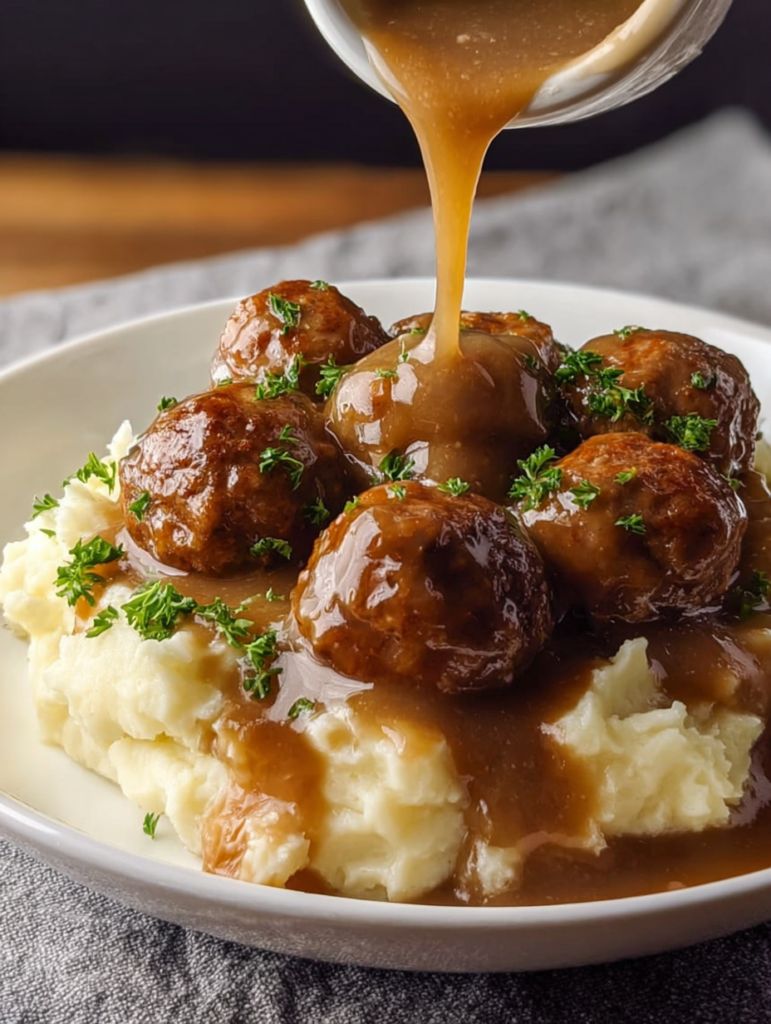
Here is the expanded, high-authority version of the article.
The Logic of a Soft Meatball
The biggest challenge when making meatballs at home isn’t the flavor—it’s the texture. Most people end up with “meat bullets” that are tough and rubbery because they overwork the proteins or skip the panade. A panade is simply a mixture of starch and liquid that keeps the meat fibers from knitting together too tightly during the cooking process. When you use breadcrumbs and milk, you aren’t just adding filler; you are creating a moisture barrier.
I’ve found that using a 15% to 20% fat ratio for the ground beef is the sweet spot. If you go too lean, like a 95/5 mix, the meatballs will be dry regardless of how much gravy you use. The fat renders out during the browning phase, creating the base for the roux that eventually becomes your gravy. It’s a closed-loop system of flavor.
Ingredients to Gather
For the Meatballs
- 2 lbs Ground Beef: Aim for 80/20 or 85/15 fat content. Ensure it is freshly thawed or cold from the fridge.
- 1 cup Plain Breadcrumbs: Panko works well for a lighter texture, but traditional fine crumbs provide a more uniform “homestyle” feel.
- 2 Large Eggs: These act as the primary binder for the proteins.
- 1/2 cup Whole Milk: This hydrates the breadcrumbs to create the panade mentioned earlier.
- 1 Medium Yellow Onion: Grating the onion is better than chopping it, as it releases juices that flavor the meat without leaving large chunks that cause the meatballs to break apart.
- 3 Cloves Garlic: Minced very fine or pressed.
- 1 tsp Salt and 1/2 tsp Black Pepper: The baseline seasoning.
- 1 tsp Dried Parsley: Adds a subtle earthiness.
- 1/2 tsp Nutmeg: This is the “secret” ingredient in comfort gravies. It doesn’t make it taste like dessert; it enhances the savory notes of the beef.
For the Comfort Gravy
- 4 tbsp Beef Fat or Butter: Use the drippings left in the pan first.
- 1/4 cup All-Purpose Flour: This is the thickening agent for your roux.
- 3 cups Beef Broth: Use a low-sodium version so you can control the final salt level.
- 1 tbsp Worcestershire Sauce: Adds acidity and umami depth.
- Salt and Pepper to taste.
Step-by-Step Cooking Method
1. Prepare the Panade Before touching the meat, combine the breadcrumbs, milk, salt, pepper, parsley, and nutmeg in a small bowl. Let this sit for 5 to 10 minutes. The crumbs should absorb all the liquid and turn into a thick paste. This prevents the breadcrumbs from sucking moisture out of the meat while it cooks.
2. Mixing the Base In a large bowl, add your ground beef, grated onion, minced garlic, and the eggs. Add the breadcrumb paste on top. Use your hands to mix this, but stop the moment everything looks uniform. Over-mixing leads to a dense, tough texture because it develops the proteins too much.
3. Shaping the Meatballs Aim for a size slightly larger than a golf ball. If the mixture is sticking to your hands, keep a small bowl of water nearby to dampen your palms. This creates a smooth surface on the meatball, which helps it brown evenly without tearing.
4. The Browning Phase Heat a large skillet over medium-high heat with a tablespoon of oil. Place the meatballs in the pan, leaving space between them. If you crowd the pan, the temperature will drop and the meatballs will steam in their own juices instead of searing. Sear them for about 2-3 minutes per side until a brown crust forms. They do not need to be cooked through at this stage.
5. Creating the Gravy Foundation Remove the meatballs and set them on a plate. Look at the fat in your pan. You need about 4 tablespoons. If you have too much, spoon some out; if you have too little, add a bit of butter. Sprinkle the flour over the fat and whisk constantly for 2 minutes. You are looking for a “blonde roux”—it should smell slightly nutty but not turn dark brown.
6. Building the Sauce Slowly pour in the beef broth about a half-cup at a time. Whisk vigorously after each addition. The mixture will seize up initially, but as you add more liquid, it will turn into a smooth, velvety sauce. Stir in the Worcestershire sauce.
7. The Final Simmer Place the meatballs back into the gravy. Lower the heat to medium-low and cover the pan. Let them simmer for 10 to 12 minutes. This finishes the cooking of the interior of the meatball while the starch in the gravy thickens the sauce further.

Avoiding Common Meatball Mistakes
The most frequent error I see is using meat that is too warm. When the fat in the beef begins to melt before it hits the pan, it leaks out of the meatball, leaving you with a grainy, dry finished product. Try to keep your beef in the refrigerator until the very moment you are ready to mix and shape.
Another mistake is skipping the sear. While it is tempting to just drop raw meatballs into simmering gravy to save time, you lose out on the Maillard reaction. That brown crust is where the “homestyle” flavor comes from, and it also helps the meatball hold its shape so it doesn’t disintegrate into the sauce.
Smart Substitutions
If you don’t have breadcrumbs, you can use two slices of white bread with the crusts removed. Tear them into small pieces and soak them in the milk until they can be mashed into a paste. This is actually the more traditional “Grandmother style” method and often results in an even softer meatball.
For those who need a gluten-free option, almond flour can work as a binder, but it doesn’t absorb moisture the same way breadcrumbs do. In that case, I recommend using a bit of mashed potato as the binder instead; it keeps the meatballs moist and stands up well to the heavy gravy.
Troubleshooting Your Gravy
If your gravy ends up with lumps, don’t panic. This usually happens if the broth is added too quickly or if the roux wasn’t whisked enough. You can fix this by pouring the gravy through a fine-mesh strainer into a clean pot, then adding the meatballs back in.
If the gravy is too thin, let it simmer uncovered for a few extra minutes. The water will evaporate, concentrating the flavors and thickening the sauce. If it’s too thick (which happens often as it sits), simply whisk in a splash of water or more broth until it reaches the desired consistency.
Equipment Tips
A cast-iron skillet is the best tool for this job. It holds heat exceptionally well, which ensures a consistent sear on the meatballs. However, if you are worried about the gravy sticking, a high-quality stainless steel pan or a non-stick skillet will also work. Just ensure the pan has high enough sides to hold three cups of broth plus the meatballs without overflowing.
Storage and Reheating Notes
This dish actually tastes better the next day. As the meatballs sit in the gravy in the fridge, the flavors of the nutmeg and garlic penetrate deeper into the meat.
When reheating, do so on the stove over low heat. The gravy will likely have thickened into a jelly-like consistency due to the natural gelatin in the beef. Add a tablespoon of water before heating to loosen it back up. Avoid the microwave if possible, as it tends to heat the meat unevenly, making the outer edges of the meatballs rubbery while the centers remain cold.
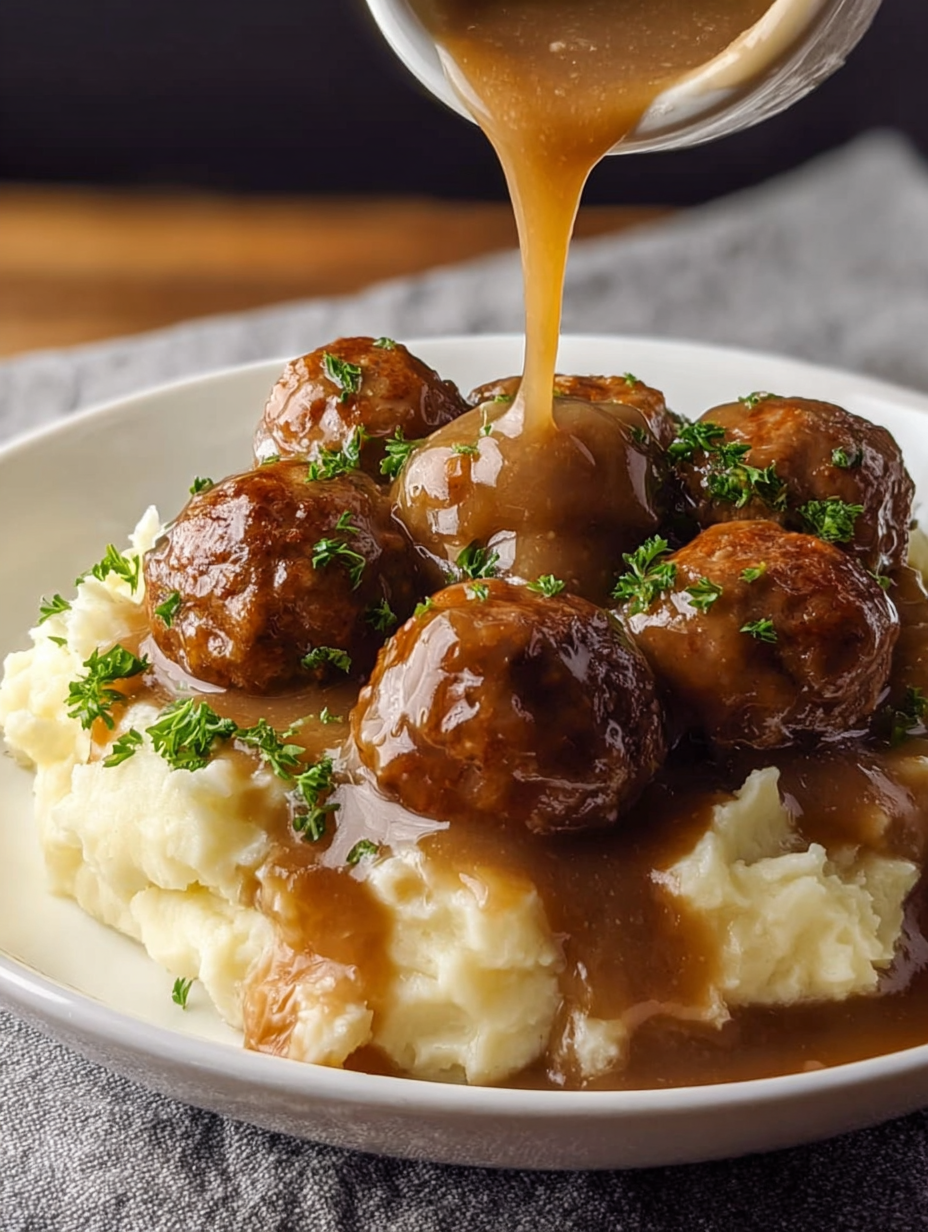
Homestyle Meatballs in Comfort Gravy
A classic dish featuring tender meatballs drenched in a rich, savory gravy, perfect for cozy family dinners or gatherings with friends.
Ingredients
-
1 pound ground beef (or halal alternative)
-
1/2 cup bread crumbs
-
1 small onion, finely chopped
-
2 cloves of garlic, minced
-
2 eggs
-
1/4 cup milk
-
1/4 cup all-purpose flour
-
2 cups beef broth
-
2 tablespoons Worcestershire sauce
-
Salt, pepper, and other seasonings of your choice
Directions
-
In a mixing bowl, combine ground beef, bread crumbs, onion, garlic, eggs, milk, and seasonings. Mix well.
-
Shape the mixture into meatballs and brown them in a skillet over medium heat.
-
Remove meatballs from skillet once cooked through.
-
In the same skillet, make a roux with flour and beef drippings; gradually add beef broth and Worcestershire sauce.
-
Return meatballs to the skillet, simmer in gravy for a few minutes.
-
Serve hot, garnished with fresh herbs if desired, and alongside your favorite sides.